
What Are the Benefits of KHOOR Cigarettes?
Explore the benefits of organic cigarettes and learn how they differ from traditional options. Discover health advantages, environmental impact, and more.



Quitting smoking is a challenging journey that requires unwavering support from friends and family. At KHOOR, we understand the importance of a strong support system in overcoming nicotine addiction.
This guide offers practical advice on how to help someone who is quitting smoking, from managing withdrawal symptoms to creating a smoke-free environment. By implementing these strategies, you can play a crucial role in your loved one’s path to a healthier, smoke-free life.
Quitting smoking ranks among the most challenging tasks a person can undertake. Nicotine alters the brain’s reward system. When smokers attempt to quit, their bodies crave nicotine, which leads to intense withdrawal symptoms. These symptoms often include irritability, anxiety, difficulty concentrating, and physical discomfort. The American Cancer Society reports that these withdrawal effects typically reach their peak within the first few days of quitting and can persist for several weeks.
The challenge of quitting extends beyond physical addiction. Smoking often becomes deeply rooted in daily routines. Many smokers associate cigarettes with specific activities, emotions, or social situations. The task of breaking these psychological connections can prove just as difficult as overcoming the physical addiction. Numerous smokers report that certain triggers (such as drinking coffee or finishing a meal) intensify their urge to smoke.
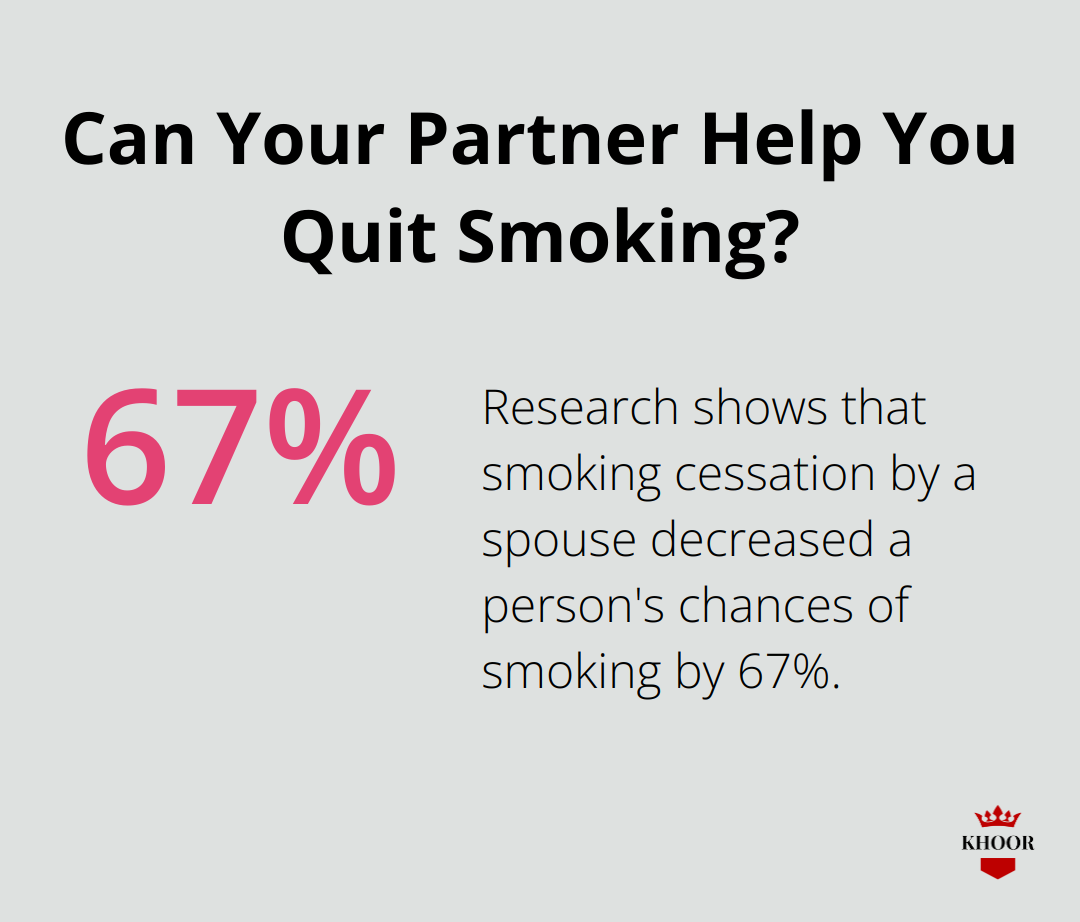
A robust support system can significantly impact a person’s ability to quit smoking successfully. Research published in the New England Journal of Medicine demonstrates that smoking cessation by a spouse decreased a person’s chances of smoking by 67%.
Support manifests in various forms, from emotional encouragement to practical assistance in avoiding triggers. For those seeking an alternative during the quitting process, tobacco-free and nicotine-free herbal cigarettes can help satisfy the hand-to-mouth habit without introducing harmful substances.
The physical symptoms of nicotine withdrawal often present a significant hurdle for those trying to quit. Common symptoms include:
These symptoms can last for several weeks, with their intensity gradually decreasing over time. Understanding and preparing for these challenges can help both the person quitting and their support network to develop effective coping strategies.
Many smokers find that certain social situations or environments trigger their desire to smoke. Common triggers include:
Identifying these triggers and developing alternative coping mechanisms (such as deep breathing exercises or chewing sugar-free gum) can significantly increase the chances of successful quitting. The next section will explore practical ways to offer support and help manage these challenges throughout the quitting process.
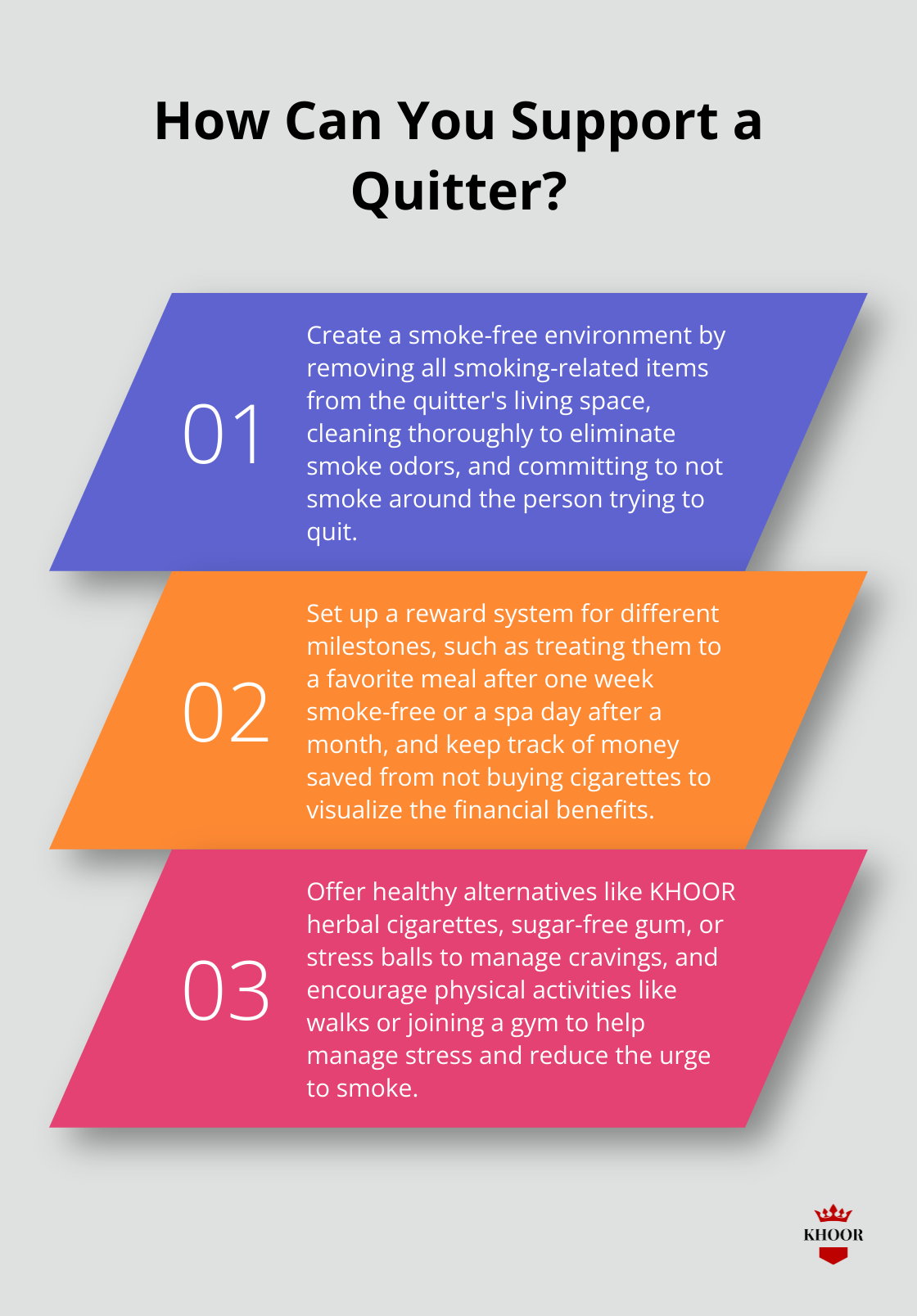
The most impactful way to support a quitter involves creating a smoke-free environment. Remove all smoking-related items from their living space, including ashtrays, lighters, and any forgotten cigarette packs. Some studies suggest that smokefree policies can protect people in private homes and settings and may produce positive effects for local businesses.
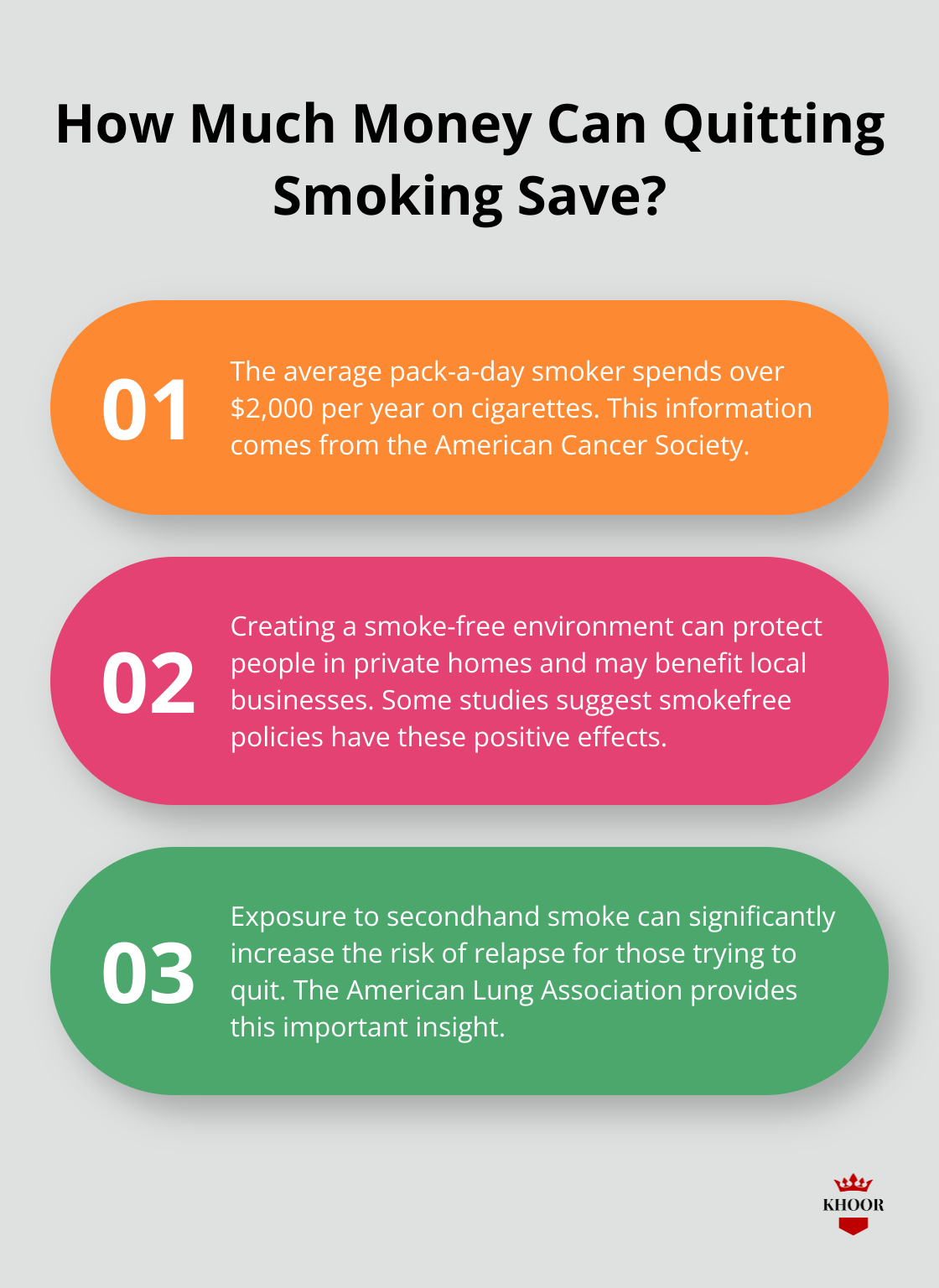
Clean thoroughly to eliminate smoke odors that might trigger cravings. This includes washing curtains, cleaning carpets, and even repainting walls if necessary. If you smoke, commit to not smoking around the person trying to quit. The American Lung Association states that exposure to secondhand smoke can significantly increase the risk of relapse.
Acknowledging progress motivates quitters. Set up a reward system for different milestones. For instance, after one week smoke-free, treat them to a favorite meal. After a month, consider a spa day or a new gadget. Make the rewards meaningful and progressive.
Keep track of the money saved from not buying cigarettes and suggest using it for something special. The average pack-a-day smoker spends over $2,000 a year on cigarettes (according to the American Cancer Society). Visualizing these savings can powerfully motivate quitters.
Suggest alternatives to help manage cravings. KHOOR herbal cigarettes provide an excellent option for those missing the hand-to-mouth habit, offering a similar experience without tobacco or nicotine. Other alternatives include sugar-free gum, carrot sticks, or stress balls.
Encourage physical activities to help manage stress and cravings. A study in the British Journal of Sports Medicine found that even short bouts of exercise can significantly reduce the urge to smoke. Suggest walks together, joining a gym, or trying a new sport.
Work with the quitter to identify their smoking triggers. Common ones include stress, alcohol, coffee, or certain social situations. Once identified, help them develop strategies to avoid or manage these triggers. For instance, if drinking coffee triggers a craving, suggest switching to tea temporarily.
For unavoidable triggers, help them prepare coping strategies. This could involve deep breathing exercises, using a stress ball, or having KHOOR herbal cigarettes on hand for particularly challenging moments. The National Cancer Institute recommends the “delay, deep breath, drink water, do something else” strategy for managing sudden cravings.
Quitting smoking often comes with emotional challenges. Be patient and understanding, especially during the first few weeks when withdrawal symptoms peak. Listen without judgment and offer encouragement. Research suggests that relying on social support from friends and family is positively associated with intentions to quit smoking within the next 6 months.
Try to distract the quitter during intense cravings. Suggest activities that keep their hands and mind busy, such as puzzles, crafts, or even simple household chores. These distractions can help pass the critical few minutes when a craving is at its strongest.
As we move forward, let’s explore how to help manage stress and develop effective coping strategies for those quitting smoking.
Quitting smoking often increases stress levels. Effective stress management becomes essential for success. Deep breathing exercises offer a quick and easy method to reduce tension. The quitter should inhale slowly through the nose for a count of four, hold for a count of two, then exhale through the mouth for a count of six. Repeating this cycle for just five minutes can lower stress levels significantly.
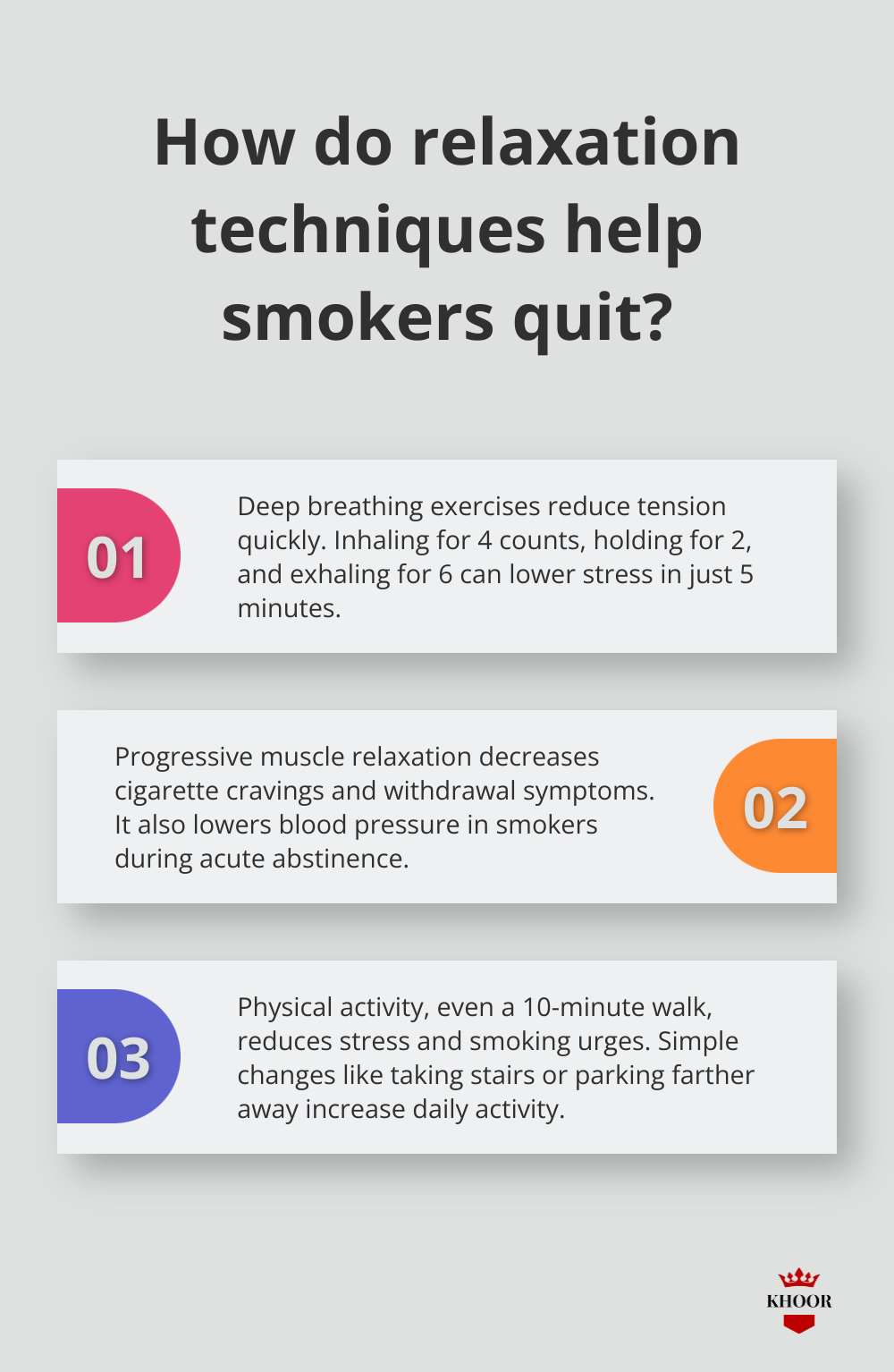
Progressive muscle relaxation provides another powerful tool. This technique significantly reduces cigarette craving, withdrawal symptoms, and blood pressure in smokers undergoing acute abstinence. The quitter should tense and relax different muscle groups, starting from the toes and working up to the head. This practice relieves physical tension and distracts the mind from cravings.
Exercise reduces stress and cravings. Even short bouts of moderate exercise, like a 10-minute walk, can decrease the urge to smoke. The quitter should find physical activities they enjoy (e.g., joining a local sports team, taking up yoga, or dancing).
For those who find it challenging to start a new exercise routine, simple changes can help. Taking the stairs instead of the elevator, parking farther away from destinations, or doing jumping jacks during TV commercials all increase physical activity.
Proper nutrition helps manage stress and cravings during the quitting process. Certain foods can reduce nicotine cravings. The quitter should snack on fresh fruits and vegetables, which satisfy the urge for something in the mouth while providing essential nutrients.
Staying hydrated is equally important. Water helps flush out toxins and can replace the hand-to-mouth action of smoking. The quitter should keep a reusable water bottle handy and set reminders to drink regularly throughout the day.
While personal support matters, professional help can provide additional tools and strategies for managing stress. Free counseling and resources (available through quitlines) have been shown to lead to higher quit rates when combined with free nicotine replacement therapy and multisession telephone support.
Support groups, either in-person or online, can benefit quitters greatly. Sharing experiences with others going through the same process provides emotional support and practical tips.
For those struggling with severe stress or anxiety during the quitting process, individual counseling with a mental health professional may help. Cognitive-behavioral therapy has proven effective in helping people quit smoking and manage associated stress.
For individuals seeking alternatives during the quitting process, KHOOR offers premium tobacco-free, nicotine-free herbal cigarettes. These provide a satisfying experience without harmful effects, helping manage cravings and rituals. KHOOR cigarettes come in various flavors (Original, Menthol, Vanilla, and Berry Blue) and offer a health-conscious alternative without compromising on taste or experience.
Smoking cessation strategies, backed by scientific research, can significantly increase the chances of quitting successfully.
Supporting someone who is quitting smoking requires patience, understanding, and a commitment to creating a smoke-free environment. You can help by celebrating milestones, offering healthy alternatives, and assisting in the identification of triggers. Stress management techniques such as relaxation exercises, physical activity, and proper nutrition play a vital role in overcoming cravings and withdrawal symptoms.
The journey to quit smoking often involves challenges and potential setbacks, but your unwavering support can make a significant difference. Quitting smoking offers numerous long-term benefits, including improved health, increased energy, and financial savings (which can be substantial over time). Your encouragement and positive attitude can help your loved one achieve their goal of a smoke-free life.
For those seeking a transitional tool to aid in their quitting journey, KHOOR offers tobacco-free and nicotine-free herbal cigarettes that can help satisfy cravings without harmful effects. These alternatives come in various flavors and provide an option for individuals working towards a smoke-free life. Your support, combined with the right tools, can make the process of quitting smoking easier and more successful.
Explore the benefits of organic cigarettes and learn how they differ from traditional options. Discover health advantages, environmental impact, and more.

Explore herbal alternatives in Waveland for a healthier smoking cessation journey. Discover natural aids to support your quit-smoking efforts.

Understand why coughing after quitting smoking is common, what triggers it, and how to manage this phase for a healthier future.

Explore if herbal cigarettes are better than normal ones. Learn about their benefits, risks, and how they compare health-wise in our latest analysis.

Support loved ones quitting smoking with practical tips. Learn how to help someone who is quitting smoking and improve their journey today.

Explore the benefits and tips of herbal smoking wellness with information on health impacts, botanical choices, and DIY blends.