What Are the Benefits of KHOOR Cigarettes?
Explore the benefits of organic cigarettes and learn how they differ from traditional options. Discover health advantages, environmental impact, and more.

Quitting smoking is a major health milestone, but it often comes with unexpected side effects. One common issue that surprises many is coughing after quitting smoking.
At KHOOR, we understand this can be concerning for those on their journey to better health. In this post, we’ll explore why this happens and how to manage it effectively.
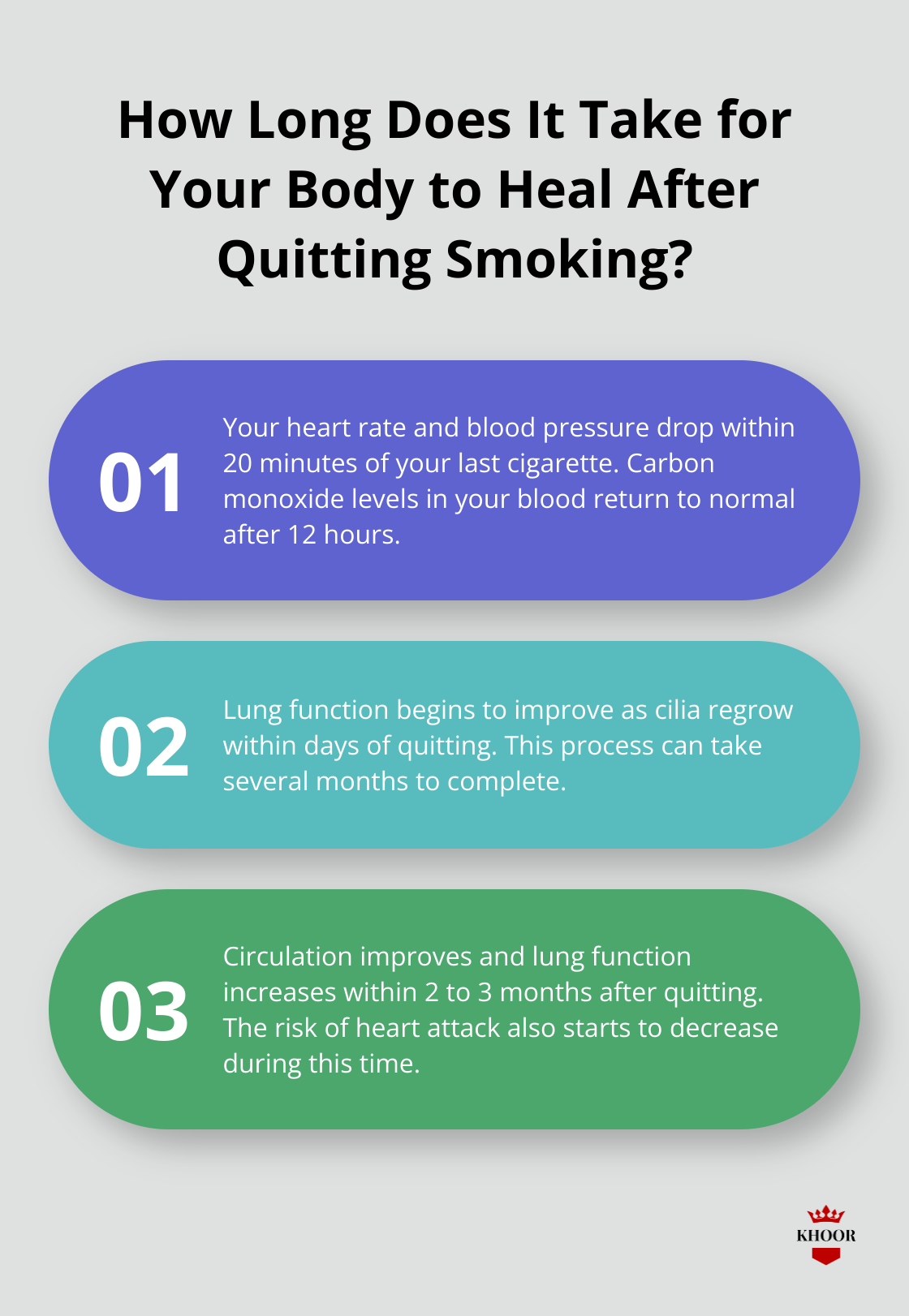
Your body starts a remarkable healing process immediately after you quit smoking. Within 20 minutes of your last cigarette, your heart rate and blood pressure begin to drop. After 12 hours, the carbon monoxide level in your blood returns to normal. These rapid changes signal the start of your body’s recovery.
One of the most significant changes occurs in your lungs. The cilia (tiny hair-like structures in your airways) begin to regrow and function more effectively. This process can start as early as a few days after quitting but may take several months to complete.
Smoking cessation has been demonstrated to reduce the rate of loss of lung function and mortality among patients with mild to moderate chronic obstructive pulmonary disease. This improvement continues over time, with ex-smokers showing better lung function even years after quitting compared to those who continue to smoke.
You might notice an increase in coughing during the first few weeks or months after quitting. This is actually a positive sign. As your lungs clear out accumulated tar and other toxins, you may experience more frequent coughing. Your circulation improves and your lung function increases within 2 weeks to 3 months after quitting. Your risk of a heart attack also starts to decrease during this time.
It’s important to note that while this coughing can be uncomfortable, it indicates that your body is working hard to repair itself. If you find the coughing particularly bothersome, try to stay hydrated to thin mucus and make coughing more productive.
While your body undergoes this healing process, you might consider alternatives to help manage cravings and habits. Herbal blends can assist with the habitual aspect of smoking without introducing nicotine or tobacco into your system.
As we move forward, let’s explore the common reasons for coughing after quitting smoking in more detail, and discuss how to manage these symptoms effectively.
When you quit smoking, your body starts a remarkable healing process. This often includes an increase in coughing, which can frustrate you but actually signals positive changes. Your lungs possess an incredible ability to heal themselves. After you quit smoking, they begin to clear out the accumulated tar and mucus that has built up over time. This process can lead to more frequent coughing as your body works to expel these harmful substances.
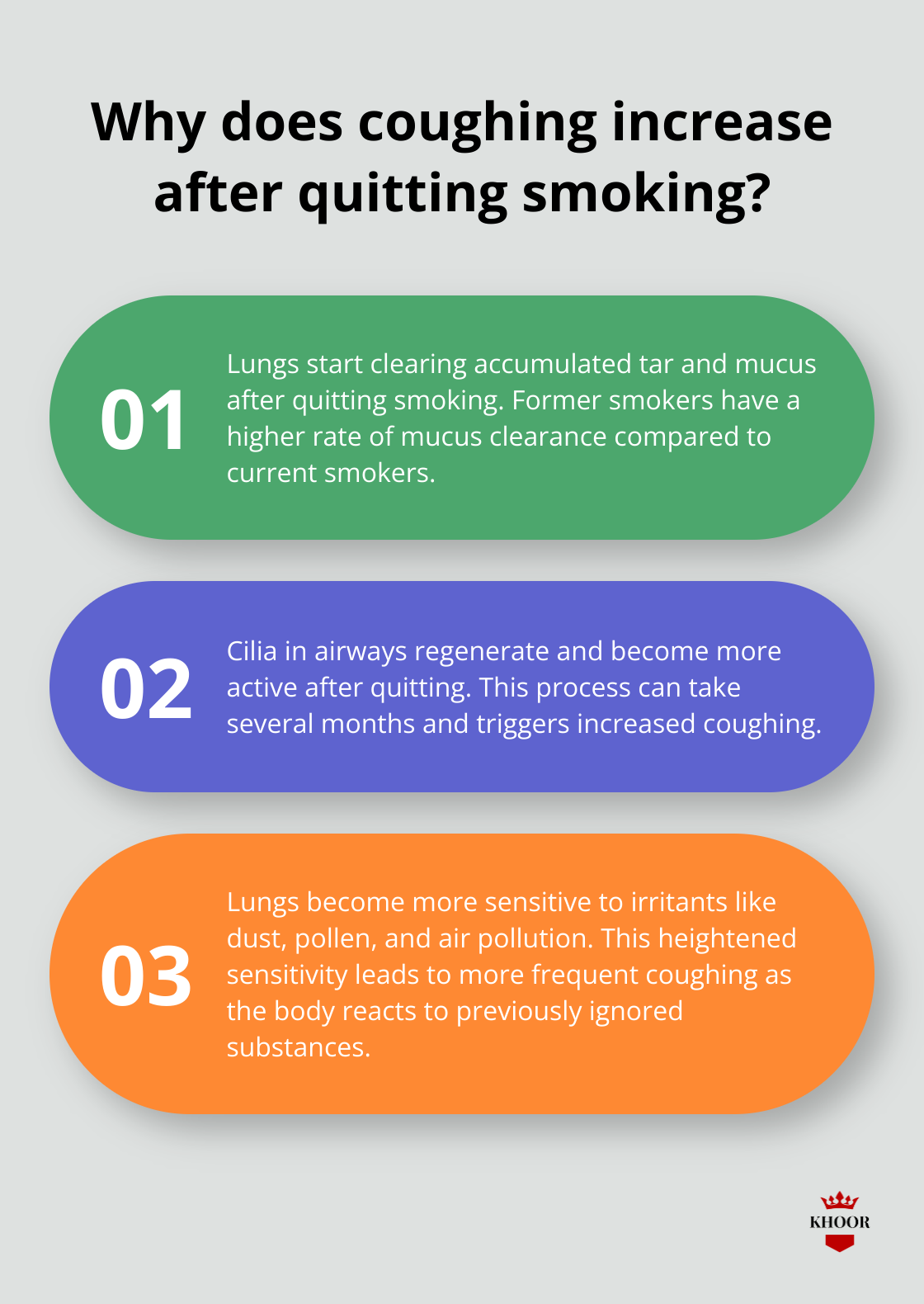
A study published in the American Journal of Respiratory and Critical Care Medicine found that former smokers had a higher rate of mucus clearance compared to current smokers. This increased clearance can lead to more productive coughs, helping to remove toxins from your lungs more effectively.
Smoking damages the cilia in your airways – tiny hair-like structures that help to trap and remove debris from your lungs. When you quit, these cilia begin to regenerate and become more active. As they regain function, they start to move mucus and other particles up and out of your lungs, which can trigger coughing.
The process of cilia regeneration can take several months. During this time, you might notice an increase in coughing as your lungs become more efficient at clearing out irritants.
As your lungs heal, they become more sensitive to irritants in the air. This heightened sensitivity can lead to more frequent coughing as your body reacts to substances it previously ignored due to the numbing effect of cigarette smoke.
Common irritants that might trigger coughing include dust, pollen, and air pollution. While this increased sensitivity can cause discomfort, it indicates that your lungs now function more normally.
The transition period after quitting smoking can challenge you. Many individuals find that herbal blends (such as those offered by KHOOR) can help manage the habitual aspects of smoking without introducing harmful substances. This approach potentially eases the transition as your lungs heal.
If persistent or severe coughing concerns you, consult with a healthcare professional for personalized advice. They can provide guidance tailored to your specific situation and ensure that your symptoms align with the normal healing process.
As your body continues to adjust to life without cigarettes, you might wonder how to manage these new coughing symptoms effectively. Let’s explore some practical strategies to help you through this phase of your quit journey.
Coughing after quitting smoking indicates your body’s healing process. This chapter presents practical ways to manage this symptom and support your recovery.
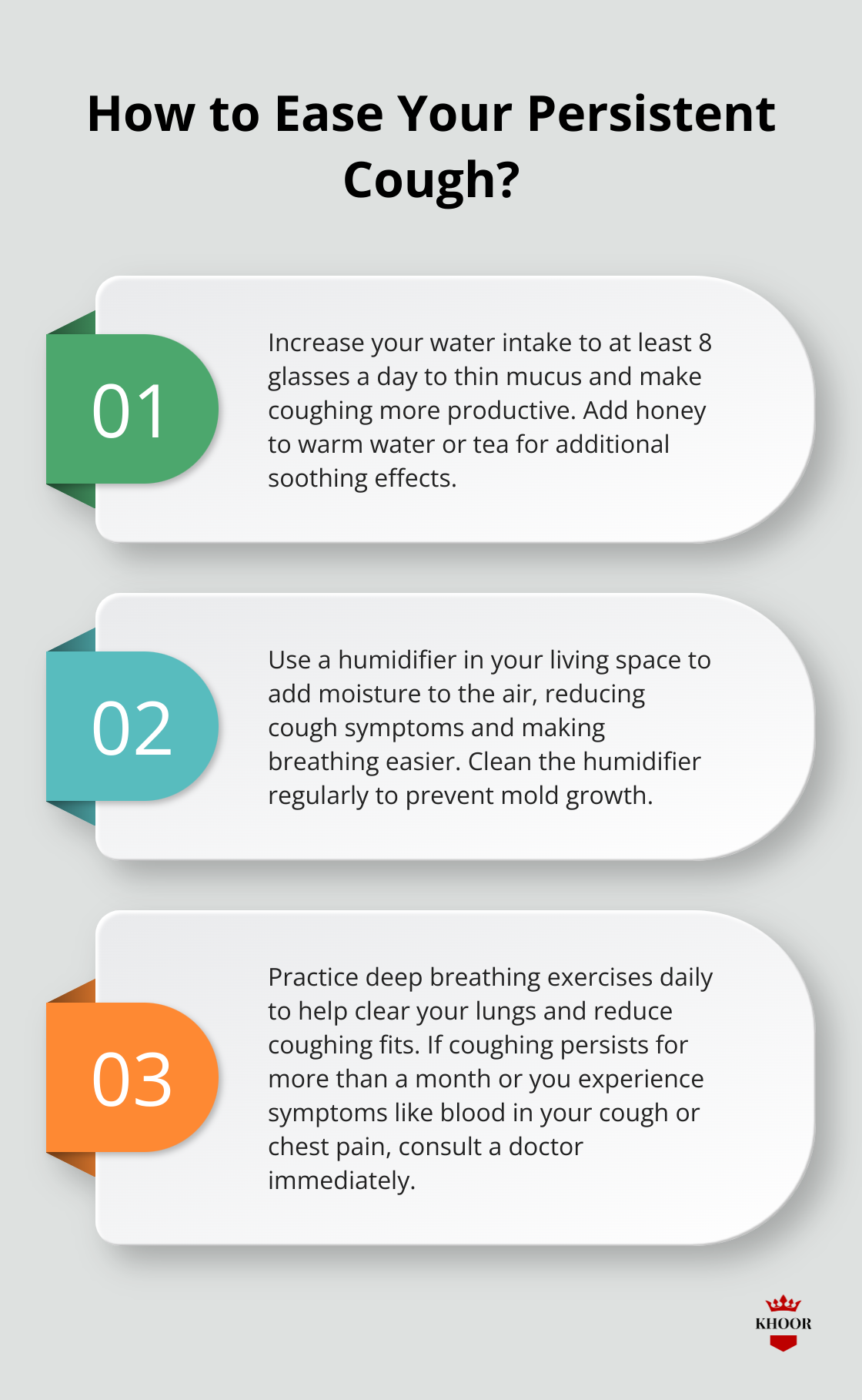
Drinking plenty of water helps thin mucus, making it easier to expel. Try to consume at least 8 glasses a day. The American Lung Association recommends increased fluid intake to soothe irritated airways and promote healing. Herbal teas (especially those with licorice root or marshmallow root) can provide additional soothing effects.
Honey acts as a powerful natural cough suppressant. A study found that a small dose of buckwheat honey given before bedtime provided better relief of nighttime cough and sleep difficulty in children than no treatment. Take a spoonful of raw honey before bed or add it to warm water with lemon.
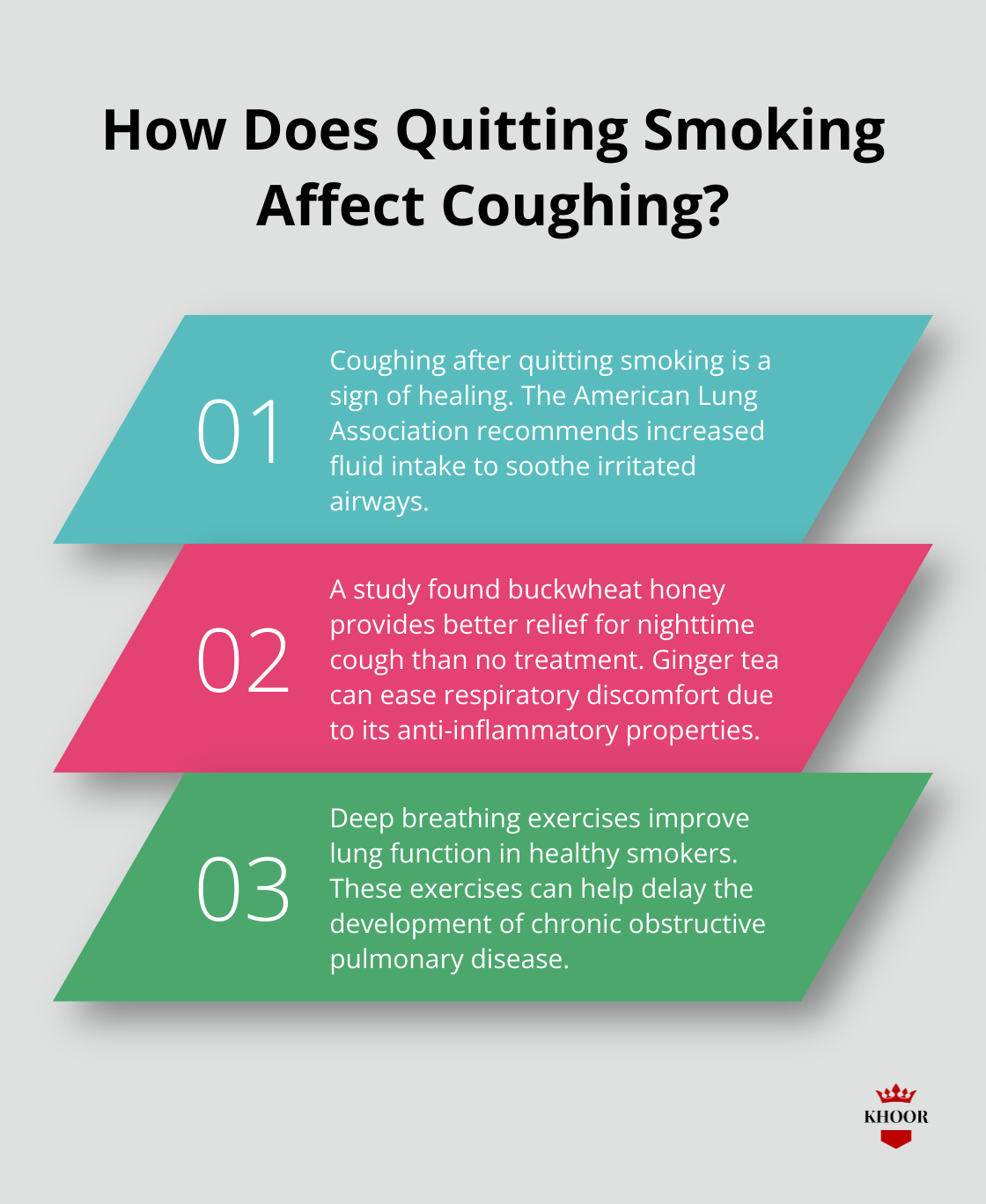
Ginger possesses anti-inflammatory properties that can ease respiratory discomfort. Make ginger tea by steeping fresh ginger slices in hot water for 10 minutes. Add honey for extra soothing power.
Dry air can irritate your throat and lungs, worsening cough symptoms. A humidifier adds moisture to the air, potentially reducing coughing and making breathing easier. Clean your humidifier regularly to prevent mold growth.
Deep breathing exercises can help clear your lungs and reduce coughing fits. Deep breathing exercise techniques were found to be useful in healthy smokers for improving lung functions and delaying the development of chronic obstructive pulmonary disease.
While coughing after quitting is normal, certain symptoms warrant medical attention. Contact your healthcare provider if you experience:
These symptoms could indicate a more serious condition requiring professional evaluation.
KHOOR cigarettes offer a tobacco-free, nicotine-free alternative that can help manage cravings without introducing harmful substances. They can serve as a useful tool in your quitting journey (especially when combined with these cough management strategies).
Coughing after quitting smoking signals positive changes in your body. Your lungs heal and clear out accumulated toxins, which causes temporary discomfort. The long-term benefits of quitting smoking outweigh this short-term inconvenience, as your risk of various diseases decreases significantly.
We understand that this phase challenges you. Each smoke-free day marks a victory for your health. Your coughing will subside as your body continues to heal, leaving you with cleaner, healthier lungs.
KHOOR offers tobacco-free, nicotine-free alternatives that can help manage cravings without harmful substances. These herbal blends provide a familiar ritual without compromising your commitment to quitting. Your quitting journey remains unique, so stay patient with yourself and focus on the healthier future you create.
Explore the benefits of organic cigarettes and learn how they differ from traditional options. Discover health advantages, environmental impact, and more.
Explore herbal alternatives in Waveland for a healthier smoking cessation journey. Discover natural aids to support your quit-smoking efforts.
Understand why coughing after quitting smoking is common, what triggers it, and how to manage this phase for a healthier future.
Explore if herbal cigarettes are better than normal ones. Learn about their benefits, risks, and how they compare health-wise in our latest analysis.
Support loved ones quitting smoking with practical tips. Learn how to help someone who is quitting smoking and improve their journey today.

Explore the benefits and tips of herbal smoking wellness with information on health impacts, botanical choices, and DIY blends.